
New to Stop-Motion Animation? What exactly is an Armature?
If you’ve ever watched a stop-motion character leap through the air, break into a sprint, or hold a delicate, emotional pose, you’ve witnessed the work of an armature.
While the clay, silicone, or fabric "skin" of a puppet gets all the glory on screen, the armature is the unsung hero working beneath the surface. Without it, stop-motion as we know it would be physically impossible. From the legendary work of Ray Harryhausen to the modern masterpieces of Aardman and LAIKA, none of it would have been possible without armatures.
The "Skeleton" of the Story
At its simplest, an armature is the internal skeleton of a stop-motion puppet. Just as your own skeleton provides structure and allows your muscles to move, an armature gives a puppet the rigidity to stand up, the joints to move and most importantly, hold a position.
In stop-motion, an animator must move a puppet in tiny increments (sometimes 24 times for every single second of film). To do this successfully, the puppet needs to meet two contradictory requirements:
-
Smooth Movement: It must be easy to move into a new position.
-
Hold: Once moved, it must stay exactly where it is put, resisting gravity and the weight of the puppet.
The Two Main Types of Armatures
Depending on the budget of the production and the complexity of the character, animators typically use one of two types of armature.
1. Wire Armatures (Basic but cheap)
These are constructed from Aluminium Armature Wire. This specific type of wire is used because it doesn't "spring back" when bent.
-
The Pros: Inexpensive, easy to build, and great for lightweight puppets or beginners.
-
The Cons: Metal fatigue. If you bend a piece of wire back and forth enough times, it will eventually snap, usually right in the middle of a crucial scene!

2. Ball-and-Socket Armatures (The Professional Standard)
These are precision-engineered, usually made of stainless steel or brass. They consist of metal balls held between plates (the sockets), connected by rods.
-
The Pros: They offer incredibly fluid, human-like movement. Most importantly, they are adjustable; if a joint feels too loose, you can simply tighten a screw.
-
The Cons: They are an investment and require more technical knowledge to assemble and maintain.

Beyond the Joints: Tie-Downs and Rigs
An armature isn't just about moving limbs. A professional armature includes Tie-Down points in the feet. These are threaded holes that allow the animator to bolt the puppet through the floor of the stage. This ensures the puppet doesn't topple over when it's balanced on one leg during a walking cycle.
An alternative to threaded tie-down is Magnetic Tie-down. Magnets are great to use when you don't want to be continually repairing holes in your set. Even the most powerful magnets lose their strength quickly through non-ferrous materials, however. As a rersult stop motion animators usually use a combination of the two methods. An Animation Stage, specifically designed for stop motion is essential to enable this.
Additionally, armatures often feature Rigging Points (usually in the back or sides). These allow a Rigging System, which is an external supporting arm to hold the puppet in the air for jumping or flying sequences. This is then digitally removed in post-production.
Why the Right Armature Matters
Choosing the right "skeleton" for your character is one of the most important pre-production decisions you’ll make. A poor armature leads to frustrated animators. A high-quality armature, like our ProPlus Armature Kit, allows the animator to focus entirely on the performance rather than fighting with a puppet that won't stay still.
Whether you're starting with a simple twisted wire armature or wanting a studio quality ball and socket joint armature, Animation Supplies can help.
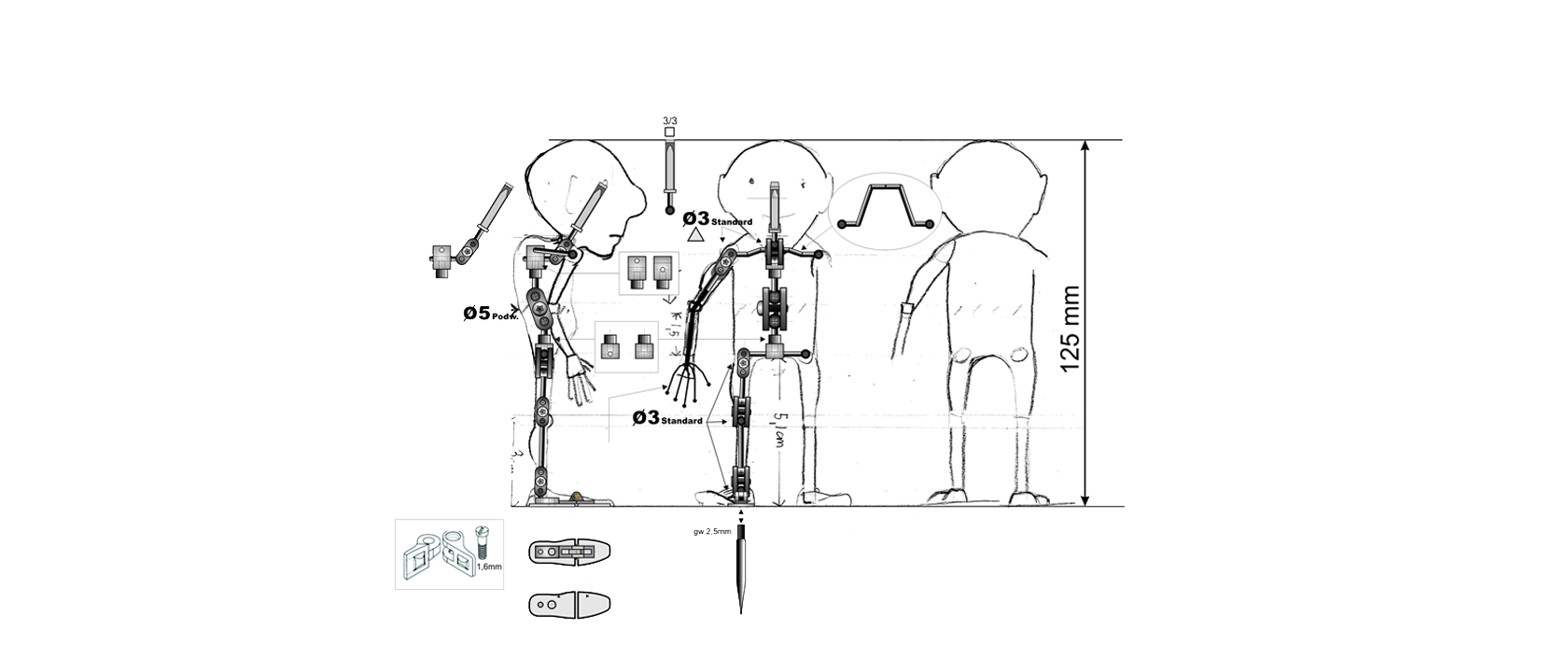
The image below shows the design for a bespoke armature that we made for a customer.

Share:
Milliput in Stop Motion
Netflix's AI Animation Studio