

The Future of Animation? Netflix Shifts to AI Animation
The animation industry is no stranger to seismic shifts. We watched 2D hand-drawn cels give way to the digital ink-and-paint era, and we saw Pixar turn 3D computer graphics into a global standard. But right now, we are sitting on the precipice of the next major evolution. Is Netflix is leading the charge into the next incarnation of the Animation Industry?
With the streaming giant leaning heavily into generative AI tools and restructuring its animation pipeline, the industry is having a massive conversation about what the future of storytelling looks like. Let’s look at how Netflix plans to integrate AI into every aspect of its animation pipeline and what it means for creators.
The Strategy: Efficiency Over Creativity?
Netflix don't intend to replace the human heart of storytelling, but will their push for cost effective, efficient productions do exactly that? AI will undoubtedly help eradicate the bottleneck of production time. In an industry where a single animated feature film can take three to five years to produce, but at what cost?
Where AI could help the Netflix pipeline:
-
Visual Development & Concept Art: Instead of artists spending weeks pitching hundreds images, directors can use AI to rapidly prototype backgrounds, colour schemes and mood boards.
-
In-Betweening & Clean-Up: One of the most labour-intensive parts of traditional 2D and Stop Motion pipelines is any manual manipulation of individual frames. AI could be used to automatically calculate the smooth "in-between" frames. This would vastly speeding up the timeline between a rough animatic and a finished shot.
-
Dynamic Asset Generation: For large-scale backgrounds or crowd scenes, machine learning models could be used to generate texture variations, clothing folds, and ambient movements without requiring an army of artists to create every individual detail.
The Creative Paradox: Tech vs. Tactility
The integration of AI has ignited fierce debate across the global animation community. Some think that Netflix’s AI approach make the process more accessible, allowing small, ambitious creative teams to achieve "blockbuster" scale on independent budgets. It strips away the repetitive, laborious tasks of clean-up and asset scaling, enabling animators to focus purely on performance, pacing, and emotional expression.
On the other hand, there is serious concern about the loss of the human touch. Animation history is defined by its beautiful imperfections, the finger printed texture of plasticine, the "boiling" of a hand-drawn line, or the real lighting of a physical miniature set. If the pipeline becomes too optimized by predictive algorithms, do stories risk losing their soul?
What This Means for Stop-Motion?
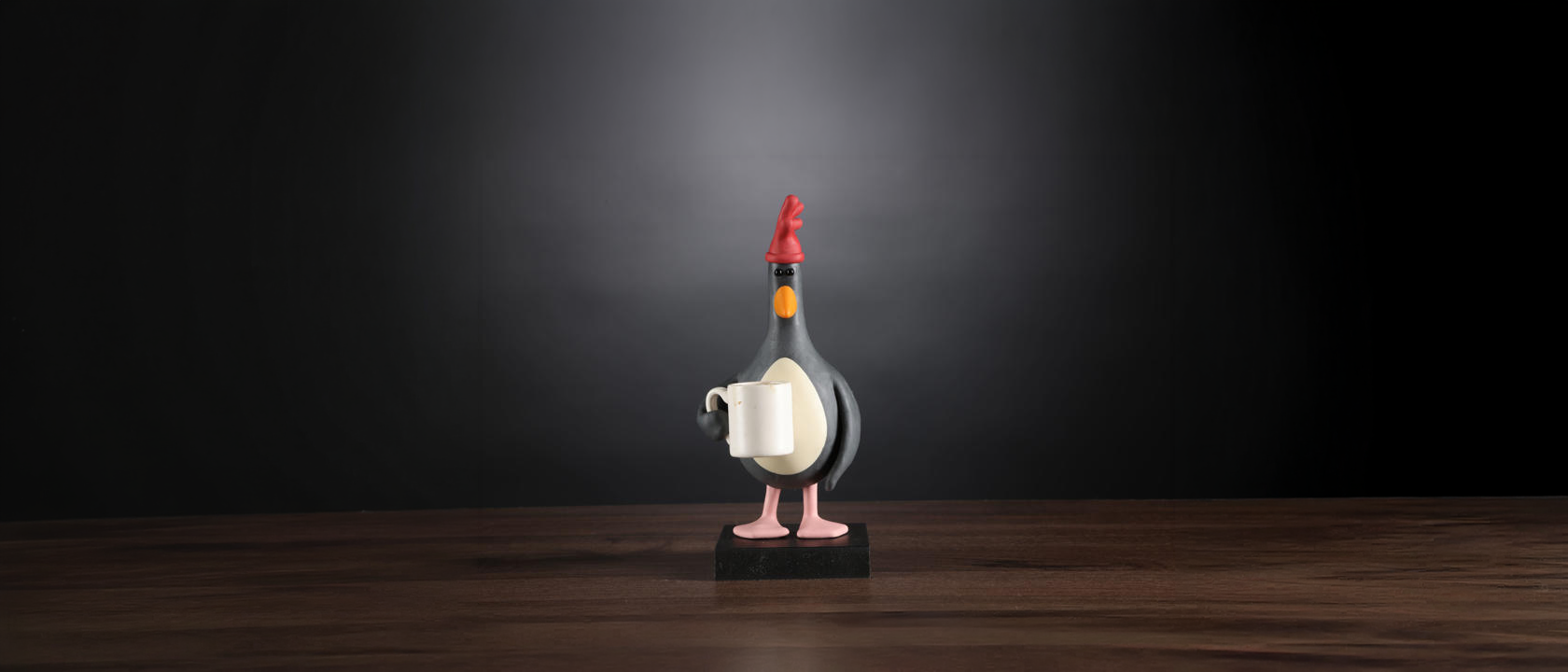
For our favourite medium, stop-motion, Netflix's heavy investment in AI presents a fascinating crossroads. Netflix has worked closely with Aardman to bring us Chicken Run: Dawn of the Nugget. Aardman themselves have spoken about using AI in their work, something we have written about here. Perhaps the two still have plans to work together.
As AI tools mature, stop-motion studios working with streamers like Netflix won't be replaced by robots. Instead, they will most likely adopt AI as a digital assistant. We'd like to imagine a workflow where:
-
An animator still physically poses a real puppet on a real stage. But instead of animating every frame, they pose key frames with the AI generating the frame inbetween.
-
An AI agent could easy be used to automatically remove rigs and supports in a fraction of time a human artist can.
-
Machine learning algorithms could correct any lens flicker or dust spots on the lens.
There is no doubt that AI will help speedup the craft of stop motion animation. What it will look like however remains to be seen.
Is the Future Hybrid?
Netflix’s push into AI animation shouldn't mean the death of the artist. In all likelihood it’ll help accelerate the evolution of the hybrid creator. Studios that thrive in this new era will be the ones that know how to embrace these new digital tools. We might also see a rise in the number of smaller, independent studio allowing a handful of people to produce the volume of work once requiring huge teams to do.
The pipeline is changing, but the goal remains the same: bringing imagination to life, one frame at a time.
Share:
What is an Armature?
Cracking Good News!