
The Animator’s Secret Weapon - Milliput
In the world of stop-motion animation, where every second usually consists of 12 tiny, high-stakes movements, your materials have to be as hardworking as you are. While clay gets the spotlight, veteran animators know that the real "heavy lifting" is done by a two-part epoxy putty that has been a studio staple for decades, Milliput.
Professional creators are demanding more from their materials, more durability, better precision, and heat resistance. Here is why Milliput remains the undisputed champion of the animation studio.
Versatile Grades for Every Creative Challenge
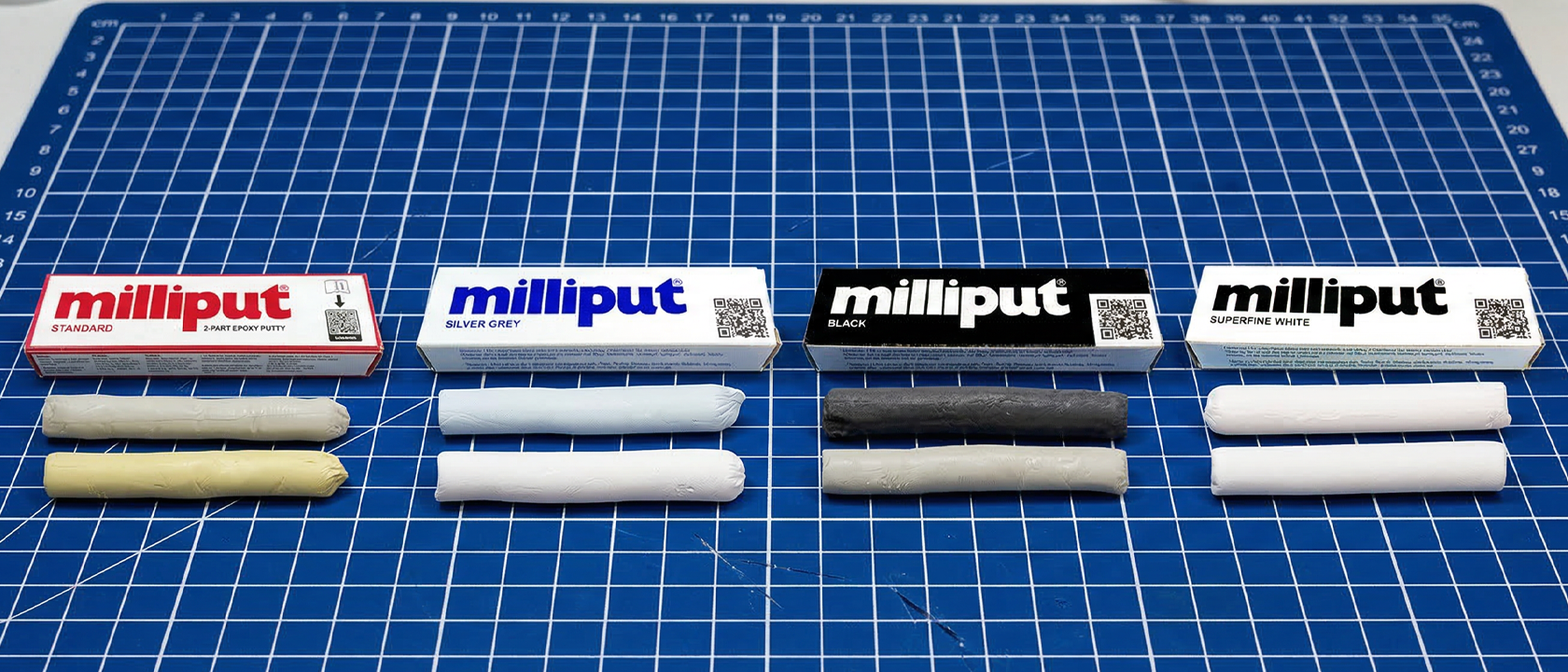
One size does not fit all in puppet fabrication. Whether you are building a rugged landscape or a delicate porcelain-faced character, there is a specific Milliput grade designed for the job:
-
Standard (Yellow/Grey): The reliable workhorse. This is the go-to for general repairs, joining together the wires in basic armatures and creating sturdy scenery.
-
Superfine White: The choice for high-detail sculpting. It produces an ultra-smooth finish that is perfect for character faces or ceramic-style props.
-
Black & Silver Grey: These specialized colors are ideal for matching metallic or dark components, often removing the need for immediate painting.
-
Terracotta: A niche favorite for garden models, brickwork dioramas, and realistic pottery repairs.
Sculpt, Set, and Machine
The magic of Milliput lies in its transition from soft putty to rock-hard solid. Once you mix the two parts in equal measure, you have approximately 90 minutes of workable "sculpting time."
Once it fully cures (usually within 3–4 hours), it transforms into a material that behaves more like wood or metal than clay. You can drill, file, and sand it to a smooth finish. This ability makes it infinitely superior to traditional clays for mechanical parts, architectural models, or any component that needs durability.
Built to withstand Heat
Milliput is heat-resistant up to 130°C. Not only does this mean it stays rock-solid under hot lights, but it also makes it the perfect partner for puppets that use a mix of materials. You can build a Milliput core and overlay it with heat-set silicone or latex, safe in the knowledge that the internal structure won't breakdown in the oven.
Technical Specifications at a Glance
| Property | Specification |
| Working Time | Approx. 60–90 Minutes |
| Full Curing Time | 3–4 Hours (Sets faster with applied heat) |
| Heat Resistance | Up to 130°C |
| Shrinkage | Zero (Chemical cure ensures perfect scale) |
| Post-Cure Finish | Machinable (Sands to a smooth finish) |
Pro-Tips for Working with Milliput
How do I get a professional, smooth finish?
Milliput is water-soluble before it sets. Instead of waiting to sand it down later, use a wet finger or a moist, lint-free cloth to smooth the surface while it's still soft. This "wet-burnishing" technique can save you hours of post-production work.
Can I speed up the drying time?
If you’re on a tight production schedule, you don’t have to wait four hours. While Milliput is cold-setting, applying gentle heat, a hair drier set to a low-temperature, can reduce the curing time significantly.
What do I do with leftover mixture?
Mixed too much? Don’t throw it away! Pro Tip: Whilst Milliput don't officially recommend this, we have heard that leftover mixed Milliput can be stored in a freezer. We're told that it will stop the chemical reaction for up to 36 hours. Just thaw it out when you’re ready to continue sculpting.
Ready to upgrade your puppet builds?
Explore our full range of Milliput Grades here and find the perfect fit for your next project.

Share:
Rig Removal