
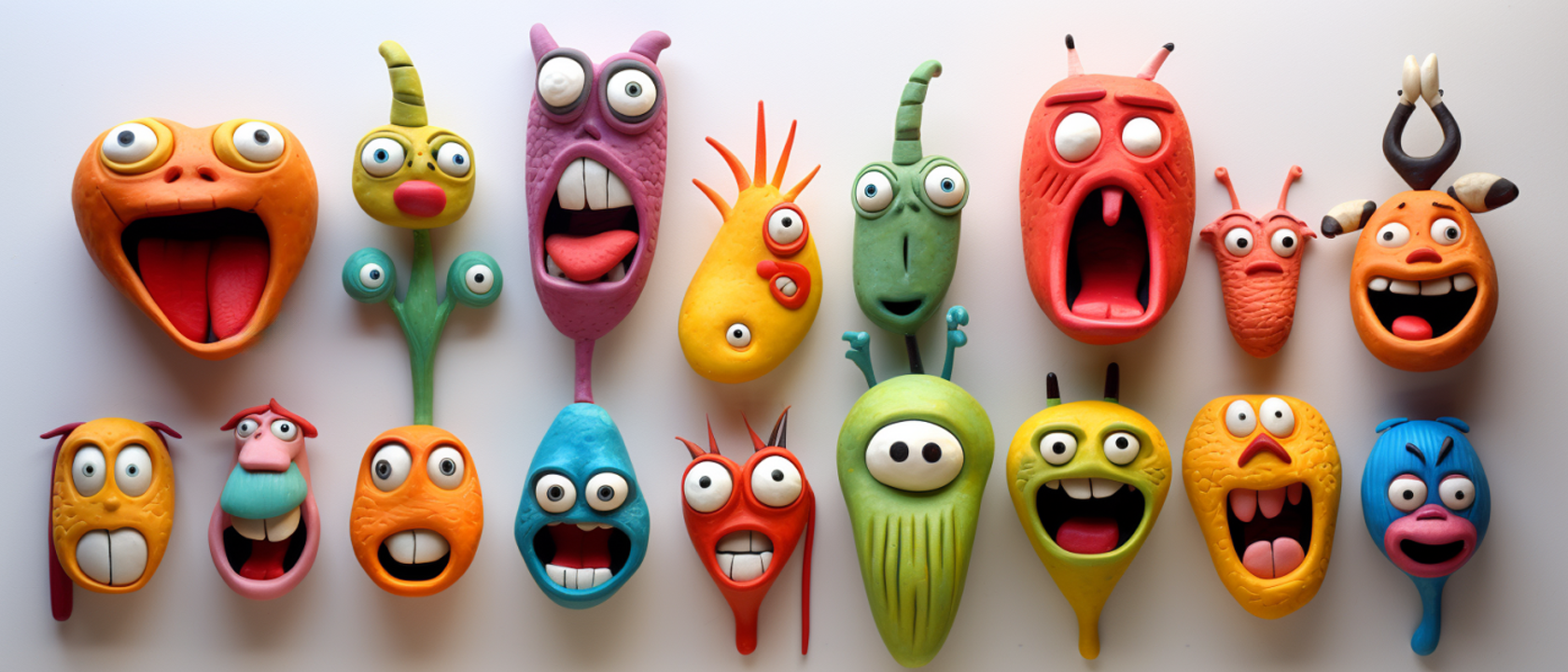
Plasticine is a popular modelling clay that has been enjoyed by children and artists for over a century. Here is a brief history of plasticine:
1897 – Origins
Plasticine was invented by William Harbutt, an art teacher from Bath, England, in the late 19th century. Harbutt sought a non-drying clay that would be suitable for his students. In 1897, he developed a clay-like substance that was made from a mixture of calcium salts, petroleum jelly, and pigments. He initially named it "Harbutt's Plasticine."
Early Success
Harbutt's invention gained popularity quickly due to its versatility and ease of use. It was softer and more malleable than traditional clays, making it easier for children to shape and model. Plasticine was also non-toxic, which was a significant advantage over some other modelling materials available at the time.
1900 – Commercial Production
In 1900, Harbutt established the "Plasticine Manufacturing Company" in Bath, where he started commercial production of Plasticine. The product's success led to the expansion of the company and the establishment of several factories.
Applications
Plasticine gained recognition in schools for its educational value. It was used to teach sculpture and modelling techniques to students of all ages. Additionally, artists began to explore Plasticine as a medium for creating temporary models and prototypes.
Evolution
Over time, Plasticine went through various refinements. Different colours and variations were introduced, allowing for more creativity and detailed sculpting. Some variations included glow-in-the-dark Plasticine and heat-sensitive colour-changing Plasticine.
Cultural Impact
Plasticine became an iconic toy, loved by generations of children. It gained significant exposure through TV shows, movies, and commercials. One of the most well-known uses of Plasticine was in the animated television series "Wallace and Gromit," created by Nick Park, which showcased the characters and their adventures using Plasticine animation.
Today
Plasticine remains popular today and is produced by several companies worldwide. It is widely available in toy stores and art supply shops, and its formulation has continued to evolve with improvements in its texture, durability, and colours.
Plasticine's long-standing success can be attributed to its unique properties that make it an enjoyable and versatile material for modelling and creative expression. It has become an integral part of many people's childhood memories and continues to inspire artistic endeavours around the world.


Share:
Stop Motion, Puppetry and CGI Hybrid Production
Christmas 2023